Call Us Today!
Call Us Today!

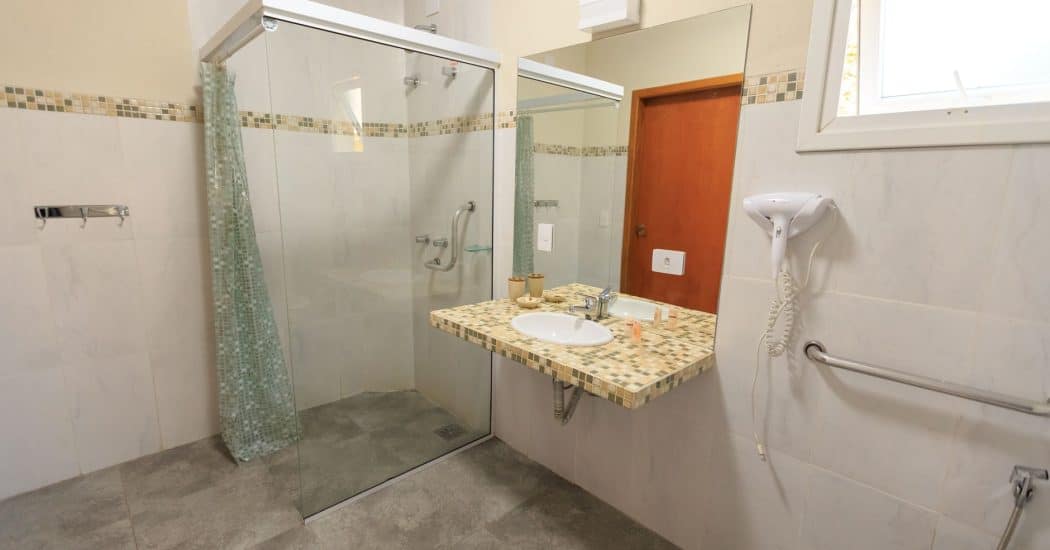
The bathroom is the most dangerous room in the house for older adults, and the numbers make the point plainly. The CDC reports that one in four adults aged 65 and older falls each year, and roughly two out of three bathroom injuries happen in or around the tub or shower. In New Orleans, where many homes are decades old and built around a single, tight bathroom, those risks are often built right into the floor plan.
Aging in place means staying in your own home safely and comfortably as you get older, rather than moving to assisted living. The bathroom is usually the first room that has to change to make that possible. Here at TurnKey Bath Remodel, we design accessible bathrooms across the New Orleans area that keep the space usable for years without making it look like a hospital room.
If a bathroom in your home is starting to feel unsafe for you or a family member, contact us today to talk through your options.
This guide covers the warning signs that a bathroom no longer fits aging needs, the features that make it safer, how to choose between the two most common solutions, and why local homes call for extra planning.
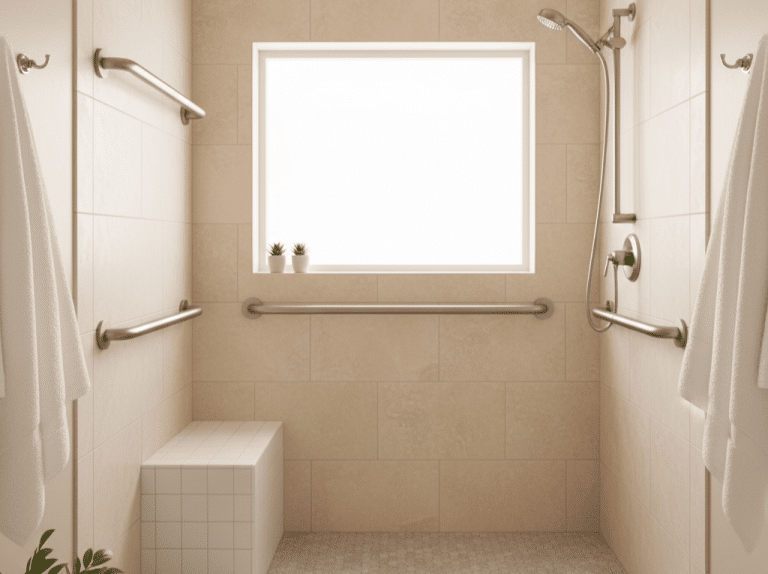 The changes that make a bathroom unsafe tend to arrive gradually, which is exactly why they are easy to miss until a near-miss forces the issue. Knowing what to watch for lets you act before a fall rather than after one.
A standard tub wall is a serious obstacle as balance and mobility change. If you or a family member grabs the wall, a towel bar, or the shower door for support while stepping in or out, the tub has already become a fall risk. This is one of the clearest signals that the layout needs to change. Lifting a leg over a wall while standing on a wet surface asks a lot of balance, and it is the exact motion behind many bathroom falls.
Towel bars, soap dishes, and shower doors are not built to hold body weight, but people lean on them when there is nothing else. When someone in the home is using these as makeshift supports, it means the room is missing the real grab support it needs. The danger is that these fixtures can pull loose without warning, turning the thing someone reached for to stay upright into the reason they fell.
Glossy tile and a slick tub floor become genuinely hazardous when wet, and New Orleans humidity keeps bathroom surfaces damp longer than in drier climates. Frequent slipping, or an anxious, careful shuffle across the floor, is a sign the surfaces themselves need attention.
Sometimes the clearest sign is behavioral. When someone starts skipping showers, bathing less often, or waiting until another person is home before using the bathroom, it usually means the room already feels unsafe to them. That quiet avoidance is worth taking seriously, because it often comes before the fall that forces a change.
An aging-in-place remodel is about removing hazards and adding stable support, not stripping out everything that makes a bathroom feel like home. A handful of well-chosen features do most of the work, and the best designs layer several of them so the room is safe from entry to exit rather than in one spot. The goal is a bathroom that quietly does its job, so the people using it feel steadier without feeling like they are living in a medical space.
Properly anchored grab bars are the single highest-value safety feature, and placement matters as much as the bars themselves. Installed into wall studs or backing near the toilet and inside the shower, they give a secure hold exactly where balance is tested. The key is putting them where the body actually reaches for support, which is why we plan placement around the person, not a generic diagram. Modern grab bars come in finishes that read as fixtures rather than medical equipment, so they add safety without changing the look of the room.
Removing the step into the shower eliminates one of the biggest fall risks in the room. A barrier-free shower with a flush, no-threshold entry lets someone walk or roll straight in, and it pairs well with a bench and a handheld sprayer so the whole routine can be done seated if needed. It is one of the most requested aging-in-place upgrades we install, and in a small local bathroom it doubles as a space-saver, since it reclaims the footprint an old tub used to occupy.
For people who still want a soak, a walk-in tub offers a watertight door so there is no high wall to climb over. Built-in seating and grab support make the whole process steadier, and many models add features like handheld sprayers and easy-reach controls. It is a strong fit when a shower alone does not meet the household’s needs, though it does take more floor space than a curbless shower, which matters in a tighter local bathroom.
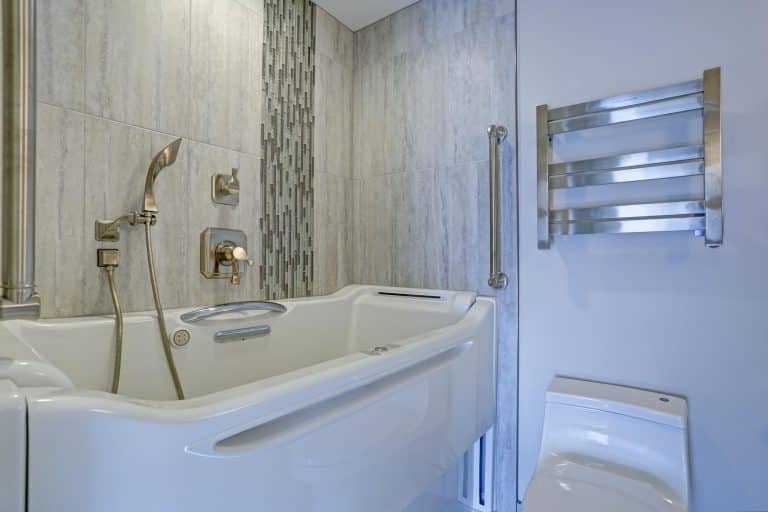 Comfort-height toilets reduce the strain of sitting and standing, and slip-resistant flooring or textured tile keeps footing secure even when the surface is wet. Good lighting belongs on this list too, since shadows and glare make edges hard to judge, and a well-lit bathroom is a safer one. These quieter changes often make the biggest day-to-day difference, and they blend into the design completely.
The two most common aging-in-place solutions solve the same problem in different ways, and the right one depends on how the household actually uses the bathroom. A barrier-free shower is usually the more flexible choice, since it works for someone standing, seated on a bench, or using a mobility device, and it keeps the routine quick and independent. There is no threshold to trip on and no wall to climb, which removes the two biggest risks in one move.
A walk-in tub is the better fit when soaking is important to someone’s routine or comfort. The watertight door means there is no high wall to step over, and built-in seating and grab support make getting in and out steadier. The trade-off is that filling and draining takes time, and the person has to stay in the tub while it empties, which suits some households and not others.
Space and budget also weigh in, and so does who else uses the room. Our comparison of whether a walk-in tub or walk-in shower is better for elderly users walks through the trade-offs in detail, and our explainer on what a barrier-free shower is and who needs one covers the shower side. In many local homes the answer is a barrier-free shower, largely because it reclaims the footprint of an old tub in a tight room, but we always start from how the space is used rather than a default recommendation.
Local homes add variables that a newer, larger house does not. An accessible remodel here has to work around the realities of older construction, tight footprints, and a humid climate, all of which shape what is possible and what it costs.
Many New Orleans bathrooms were carved out of space that was never designed as a bathroom, so walls are not always where you would want them and framing is rarely standard. A grab bar is only as strong as what sits behind the drywall, and in an older home that backing often has to be added. The humidity does not just make floors slick, it also shortens the life of finishes that are not rated for constant moisture. Planning for all of this before the fixtures go in is the difference between a remodel that lasts and one that needs revisiting. The table below sums up the factors that come up most often.
| Local Factor | Effect on an Aging-in-Place Remodel | What Helps |
|---|---|---|
| Older, narrow bathrooms | Little room for a walk-in tub or a turning radius | A curbless shower that reclaims the tub footprint |
| High humidity | Surfaces stay wet and slippery longer | Slip-resistant tile and a properly sized exhaust fan |
| Single-bathroom layouts | The one bathroom must serve every user safely | A flexible barrier-free design plus a handheld sprayer |
| Aging framing and walls | Grab bars need solid backing that may not exist yet | Adding blocking in the walls during the remodel |
Planning for these factors up front is what separates a remodel that truly supports aging in place from one that only looks accessible. The walls have to be right before the fixtures go on them, and the drainage and slope of a curbless shower have to be planned before the tile is set. These are not details you can add later, which is exactly why they belong in the plan from day one.
The most important thing to understand about aging-in-place remodeling is that it works best before it is urgent. Adding grab support, removing the tub step, and securing the floor are far easier to plan calmly than to scramble for after a fall has already happened. A safer bathroom protects independence, and it lets people stay in the home they love for longer.
We design these bathrooms to be safe and to still look like part of your home, not a clinic. Every project starts with how the room is actually used, so the result fits the people living with it.
The families we work with usually tell us the same thing afterward: the peace of mind was worth more than they expected. Knowing a parent can shower without a family member hovering nearby, or that the room will still work if needs change in a few years, takes a quiet weight off everyone. A bathroom that supports independence does more than prevent a fall, it lets people keep their routine and their dignity intact.
 At TurnKey Bath Remodel, our team builds accessible bathrooms across the New Orleans area with the local conditions in mind from the first measurement. If you are thinking ahead for yourself or a loved one, call us today at (504) 513-6366 to schedule your free consultation.
What is an aging-in-place bathroom remodel?
It is a remodel designed to let someone use the bathroom safely and independently as they get older. It typically adds grab bars, a curbless shower or walk-in tub, comfort-height fixtures, and slip-resistant surfaces, chosen to fit the specific household rather than a one-size template.
Are grab bars enough, or do I need a full remodel?
It depends on the current bathroom. Grab bars alone can help in a room that is otherwise workable, but if the biggest risk is stepping over a tub wall, no amount of grab bars fixes that. We assess the whole room and recommend only what the situation calls for.
Is a walk-in tub or a barrier-free shower better for seniors?
A barrier-free shower is usually more flexible, since it works whether someone is standing, seated, or using a mobility aid. A walk-in tub is better when soaking matters. The right answer comes down to how the household uses the bathroom and how much space is available.
Can you make a small New Orleans bathroom accessible?
Yes. Tight bathrooms are common in local homes, and a curbless shower that reclaims the old tub footprint is often the key move. Careful layout planning and space-saving fixtures make even a small room safer and more usable.
Do grab bars need special installation?
Yes. Grab bars must be anchored into wall studs or solid backing to hold body weight safely, not screwed into drywall alone. When a bathroom lacks that backing, we add blocking inside the wall during the remodel so the bars are secure.
Will an accessible bathroom look like a hospital?
No. Modern accessible fixtures, from grab bars to curbless showers, come in finishes that read as design choices rather than medical equipment. Grab bars now double as towel bars, and a curbless shower with good tile looks like a high-end upgrade, not a medical retrofit. We design these bathrooms to blend into the home while still doing their job.
Does aging-in-place remodeling add home value?
It can, especially as more buyers look for single-level, accessible features. A well-designed accessible bathroom appeals to a wide range of buyers and is a genuine selling point, not a niche modification.
How do I get started on an aging-in-place remodel?
Start with an in-home assessment of the current bathroom and the needs of the people using it. We provide free consultations, so we can look at the space, talk through the options, and give you an itemized plan before any work begins. Planning ahead, before a fall makes it urgent, gives you the room to make calm, cost-effective choices rather than rushed ones.