What Bathroom Lighting Actually Works in New Orleans Homes?
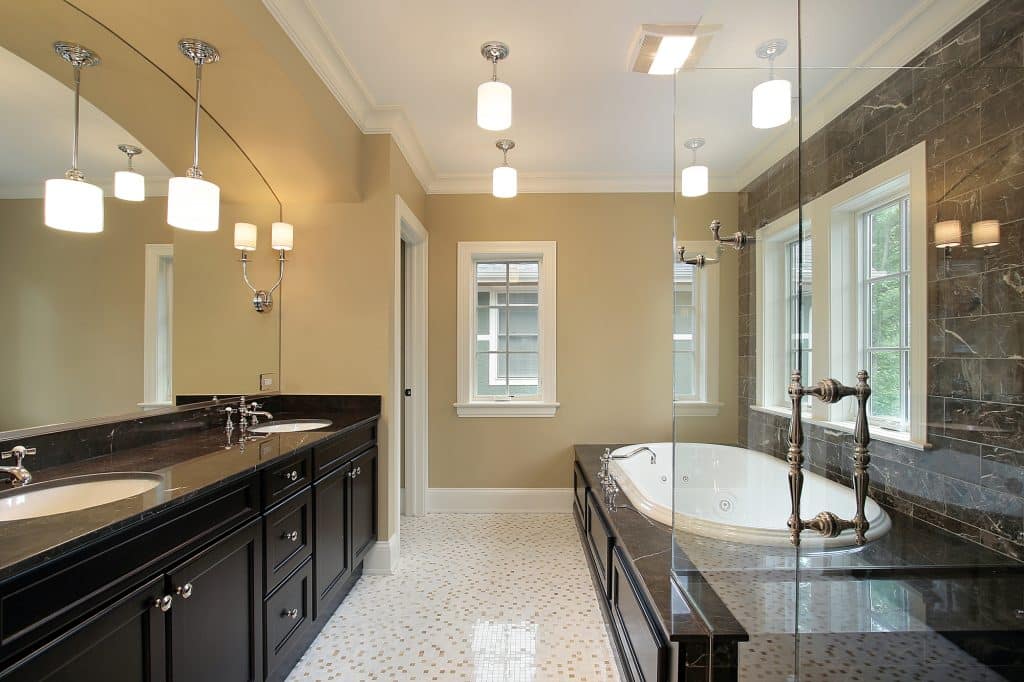
Good bathroom lighting in New Orleans comes down to three things: light the face from the front, pick fixtures rated for moisture, and keep every bulb the same color.
Most bathroom lighting problems are not about style. They are about a single ceiling fixture that throws shadows across your face, a bulb that turns the tile a strange shade of green, or a fixture that starts to rust a couple of summers in.
In an older New Orleans home, the bathroom is often small, the ceiling may be high, and the air is humid most of the year. That combination is hard on cheap fixtures and unforgiving of poor placement.
Here at TurnKey Bath Remodel, we spend our days inside these bathrooms, so let’s sort out what actually works from what only looks good in a showroom.
If you are planning a bathroom remodel and want the lighting thought through at the same time as the shower or tub, contact us and we will walk the room with you.
What Does a Bathroom Actually Need From Its Lighting?
A bathroom does several jobs, and one light fixture cannot do all of them well. Designers usually talk about lighting in layers, and the idea is simpler than it sounds.
Task Light at the Mirror
This is the light you shave, put on makeup and check your skin by, so it matters more than any other fixture in the room.
A single fixture directly overhead lights the top of your head and casts shadows under your eyes and chin. Light that comes from the sides of the mirror, or from a fixture mounted just above it and aimed toward you, fills in your face evenly.
General Light for the Whole Room
This is the light that lets you see the floor, find a towel and clean the room. In a small bathroom, a single well-placed ceiling fixture is often enough. In a larger one, two or more recessed lights spread the light more evenly.
Light Inside or Near the Shower
A glass enclosure or a dark tile surround can turn a shower into a cave. A fixture placed to light the shower itself makes the space safer to step into and easier to keep clean, because you can actually see the soap film and grout.
Low Light for Nighttime
A dim layer, such as a small light near the floor or a dimmable fixture, lets you use the bathroom at night without switching on full brightness. It is a small detail that people tend to appreciate every single night.
Okay, So How Do You Choose the Fixtures?
Once you know which layers you want, the choices narrow quickly. Three questions do most of the work.
Is the Fixture Rated for Moisture?
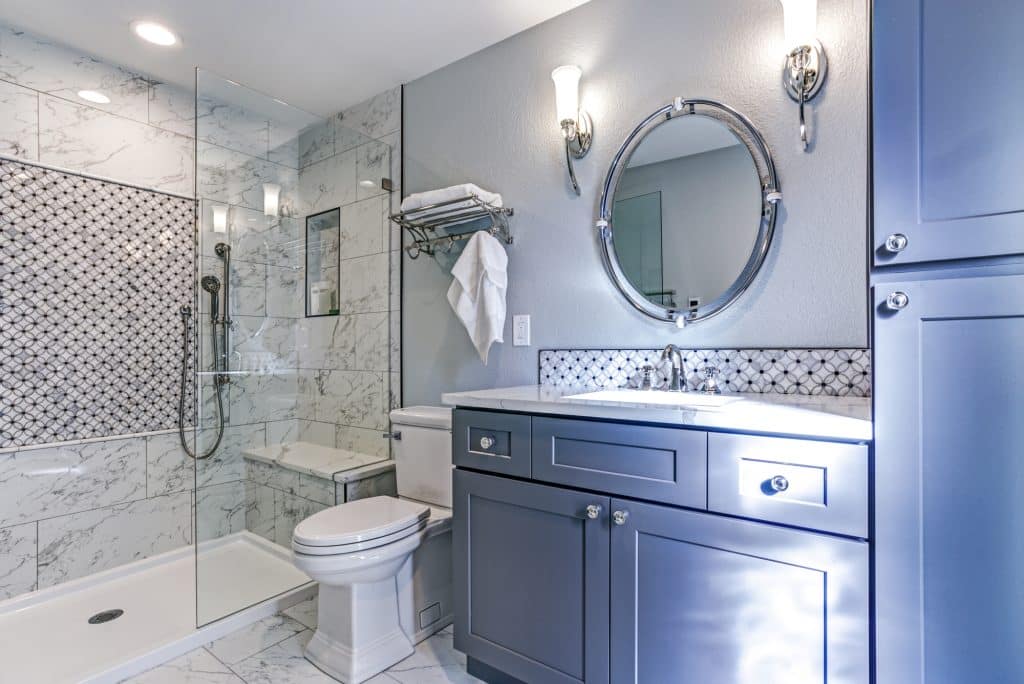 This is the big one in New Orleans. Light fixtures carry ratings for the conditions they can handle, usually marked dry, damp or wet.
The definitions in federal workplace rules give a sense of the difference. OSHA’s electrical definitions describe a damp location as including interior locations subject to moderate degrees of moisture, and a wet location as including locations subject to saturation with water.
A bathroom is moist, and the area in and around a shower can see direct spray. Fixtures near a tub or shower generally need a damp or wet rating, and a licensed electrician should confirm what the electrical code requires for each exact position in your room. Between daily showers and the humidity outside, a dry-rated fixture in the wrong spot is the one that starts to corrode early.
Will the Bulb Survive the Fixture?
Enclosed fixtures are common in bathrooms because they keep moisture away from the bulb. The trade-off is heat.
The US Department of Energy’s Federal Energy Management Program notes that fully enclosed fixtures trap heat and increase the temperature the bulb runs at, and that this heat can affect the performance and life of certain LED products. Its advice is to check the packaging or specifications to confirm a bulb can be used in a fully enclosed fixture. It is a two-second check that saves an early burnout.
Will the Finish Hold Up?
A moisture rating tells you the fixture is built for the conditions. It does not tell you how the finish will look after a few years of steam and humid summers.
Before you choose, ask what the fixture body is made of and read the warranty terms on the finish. A fixture that is easy to wipe dry, without deep crevices where moisture sits, is also easier to keep looking new.
Does It Need to Dim?
Dimming is what makes the nighttime layer work. The same Department of Energy guidance says LEDs generally dim better than CFLs, but that it is important to make sure the LEDs are compatible with the dimming system. A mismatched bulb and dimmer is a common cause of flicker and buzzing.
The Color of the Light Thing (It Matters More Than You Think)
Two numbers on the bulb box decide whether your bathroom looks warm and inviting or flat and clinical. Both are easy to miss when you are standing in the store aisle.
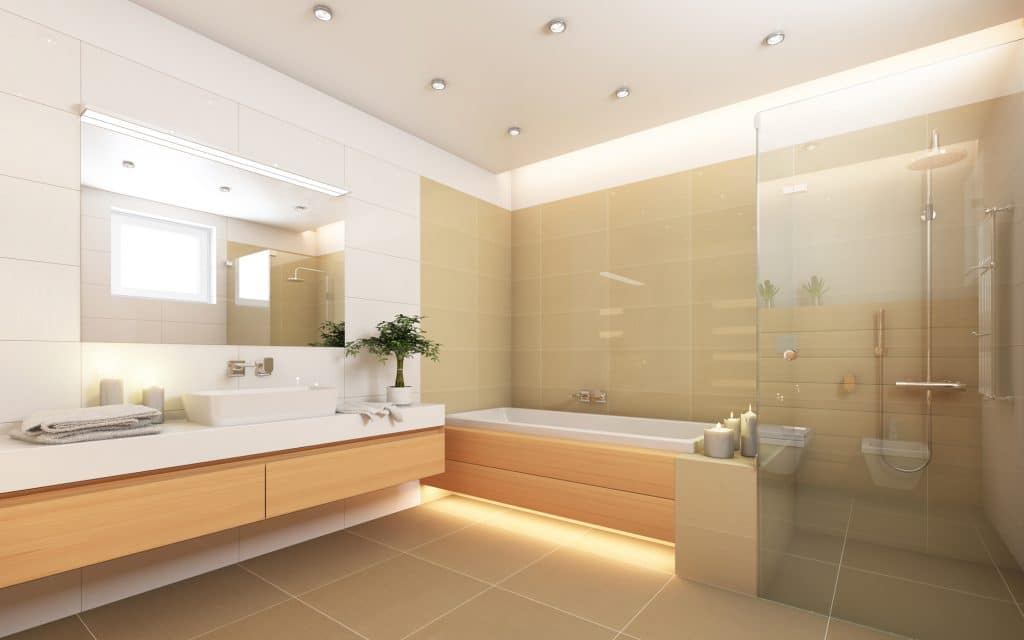 The first is color temperature, measured in Kelvin. The Department of Energy describes artificial light as ranging from a yellowish, warm white to a bluish, cool white. Its reference table lists 2,700 K as warm and suited to homes, 3,000 K as soft and also suited to homes, and 4,100 K as cool, the kind of light used in offices and classrooms.
The second is the color rendering index, or CRI, a 0 to 100 measure of how accurately a light shows colors. Higher is better, and the same guidance notes that ENERGY STAR qualified bulbs must have a CRI of 80 or greater. At a bathroom mirror, where you are judging skin tone and makeup, a good CRI makes a visible difference.
The most common mistake is mixing. The Department of Energy points out that a jump from 2,700 K to 4,100 K is noticeable and can leave people dissatisfied with the space. A warm vanity light next to a cool ceiling light makes both look wrong, so choose one color temperature and use it for every bulb in the room.
What About Small or Older Bathrooms?
Many New Orleans bathrooms were never designed with lighting in mind. A tight bathroom in an older home may have a single ceiling box, a small window and very little wall space beside the mirror.
In a small room, better placement usually beats more fixtures. A fixture on each side of a narrow mirror, or one well-aimed fixture above it, often does more than an extra ceiling light.
Light-colored walls and tile also bounce light around and make a small room feel larger. A dark tile surround soaks up light, so plan a little more of it if that is the look you want.
High ceilings are common in older New Orleans houses, and they change the math. A ceiling fixture far above the mirror lights the room but does little for your face, which is one more reason to put task light at the mirror itself.
Humidity is the other half of the problem, and lighting alone cannot solve it. A bathroom that stays damp is hard on fixtures, paint and grout alike. Our guide to sizing and venting a bathroom exhaust fan covers the ventilation side, and our article on preventing mold in a New Orleans bathroom explains why moisture control comes first.
If you are adding a half bath rather than remodeling an existing one, the same principles apply, and our guide to adding a powder room to a New Orleans home walks through how that project comes together. For the bigger picture on what is worth building into a bathroom this year, see our take on 2026 bathroom design trends.
Bottom Line
The bathroom lighting that works in New Orleans is not the most expensive or the most dramatic. It is light from the front at the mirror, fixtures rated for the moisture they will actually see, bulbs that can handle the fixture they sit in, and one consistent color temperature throughout.
Lighting is electrical work, so a licensed electrician should handle the wiring and confirm the code requirements for every fixture position. Planning it early, at the same time as the shower or tub, is what keeps it from becoming an afterthought.
Planning a Bathroom Remodel?
At TurnKey Bath Remodel, we give fixed-price quotes, so you know where you stand before work begins. If you are planning a new shower or tub and want to talk through the room as a whole, call us at (504) 513-6366.

At TurnKey Bath Remodel, we have spent 25+ years remodeling bathrooms across New Orleans and Southeast Louisiana, with most projects installed in as little as one day.
Book your FREE design consultation